Japan’s conservative leader bets big on Takaichi mania with snap election. Will her gamble pay off?

Japan’s Political Scene Shakes Up With A New Leader
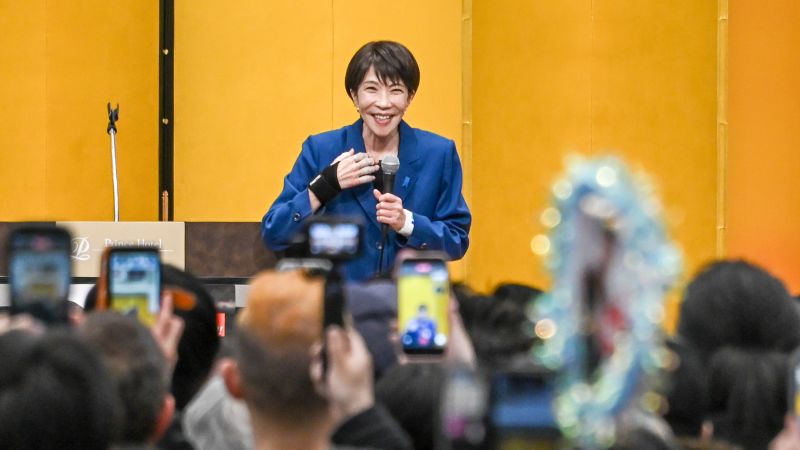
In scenes usually reserved for J-pop stars, thousands of fans gather in the chilly air outside a small train station on the outskirts of Tokyo, their phones raised in anticipation for a glimpse of Japan’s newest political fascination. Suddenly, Prime Minister Sanae Takaichi emerges onto a concrete walkway, sparking a wave of excitement through the crowd she hopes will translate into votes for her Liberal Democratic Party (LDP) at an unexpected lower-house election on Sunday.
Takaichi announced the election just three months into her leadership, pledging to resign if the LDP fails to achieve a majority. This bold decision stands out in Japan’s typically risk-averse political landscape. Yet, Takaichi defies conventional norms, challenging the traditional male-dominated image of Japanese politics with her unique blend of charisma and digital savvy.
Since taking office in October, the motorbike-riding heavy metal drummer has redefined political engagement through social media, captivating younger audiences with concise, slogan-driven content and viral videos of her meetings with global leaders. Her ability to connect with netizens has even earned the favor of U.S. President Donald Trump, who has publicly endorsed her with a “Complete and Total Endorsement” and invited her to the White House next month—regardless of this weekend’s electoral outcome.
Support among domestic youth is particularly notable, with Takaichi’s online presence fostering a sense of accessibility. Even minor aspects of her routine, such as the bag she carries or the pen she uses, are scrutinized and celebrated, reinforcing her image as a leader in tune with the public. In her hometown of Nara, souvenir shops showcase items featuring her slogans, key chains, stationery, and cookies that pair her likeness with that of her political idol, former British Prime Minister Margaret Thatcher.
“It makes me feel closer to her,” says one 20-year-old student, highlighting her use of the same pen as the prime minister. “Compared to the previous prime minister, you see a lot of posts on social media showing how hard she’s working,” adds Yuho Oishi, noting the growing interest in politics among younger generations.
Social media has long been a tool for politicians worldwide to attract younger voters. However, in Japan—a society where older demographics dominate—it has become a distinctive feature for a trailblazing figure like Takaichi. “Young people make full use of social media, and they find that appealing,” explains her secretary Noboru Kinoshita. “That’s where we’re focusing our efforts.”
And the strategy seems to be bearing fruit. Takaichi’s approval ratings are remarkably high, with some polls showing over 80% support among those in their 20s—a level not seen in years and the envy of many in the political arena.