
A young lawyer is taking Pakistan’s government to court over ‘period tax.’ She hopes the case will break sexual health taboos
Breaking the Silence on Menstruation in Pakistan
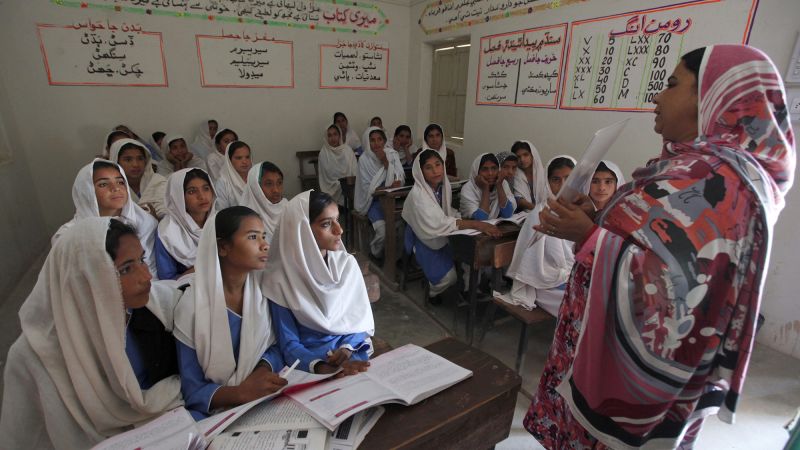
For years, Mahnoor Omer kept her experience private. Her school friends in Islamabad, the Pakistani capital, often felt embarrassed when the topic arose, she recalled. “This happened so many times. A class fellow of mine would get her period during class,” she told CNN late last year. “Her white kameez on the back was entirely red. She freaked out. She had absolutely no idea what was going on with her.”
A Legal Push for Change
Now, the 25-year-old lawyer and her colleague, Ahsan Jehangir Khan, 29, are challenging the stigma surrounding menstruation. They are spearheading a landmark legal case that urges the government to remove taxes on menstrual products and classify them as essential goods rather than luxury items. Medical workers and women’s rights activists backing the case told CNN that deep-rooted social taboos around sexual health in Pakistan have influenced tax policies, making sanitary items unaffordable for many and worsening gender disparities in education, health, and social welfare.
“I think what we’ve started here is not a legal case, but a movement to now bring period poverty to the forefront,” said Omer.
Regional Inspiration and a Call to Action
Omer, the petitioner in the case, and Khan, her legal representative, expressed hope that their efforts could mirror successful initiatives in other regions. Similar campaigns in India and Nepal have prompted governments to reduce or eliminate taxes on period products. “In the Global South, people or governments are talking about this. We should be the ones taking charge,” Khan told CNN.
The Financial Burden of Menstruation
Bushra Mahnoor, a reproductive rights activist, noted that only about 12% of women and girls in Pakistan use commercial sanitary products, according to UNICEF. Even among those, she described menstrual products as a “luxury” in her family home. She often reinforced pads with cotton or used cleaning rags to extend their use beyond medically recommended hours. “Periods were very traumatic during my whole childhood,” the 22-year-old from Attock, a small town in Punjab province, northern Pakistan, said. She began menstruating at age 10, a “very isolating” phase of life.
“Periods were very traumatic during my whole childhood,” said the 22-year-old from Attock.
Lawyers argue that by taxing sanitary items, the Pakistani government has systematically overlooked women’s and girls’ rights to health and education, hindering their full participation in public life. They claim this violates Article 25 of the Constitution, which prohibits sex-based discrimination. Under the Sales Tax Act of 1990, an 18% sales tax is applied to locally made sanitary pads, while imported menstrual items face a 25% customs tax, according to the legal petition published by Omer and Khan in October. That additional…
CNN has contacted Pakistan’s health ministry for comment on the case.